Self-Custody Cards: Your Keys, Your Card
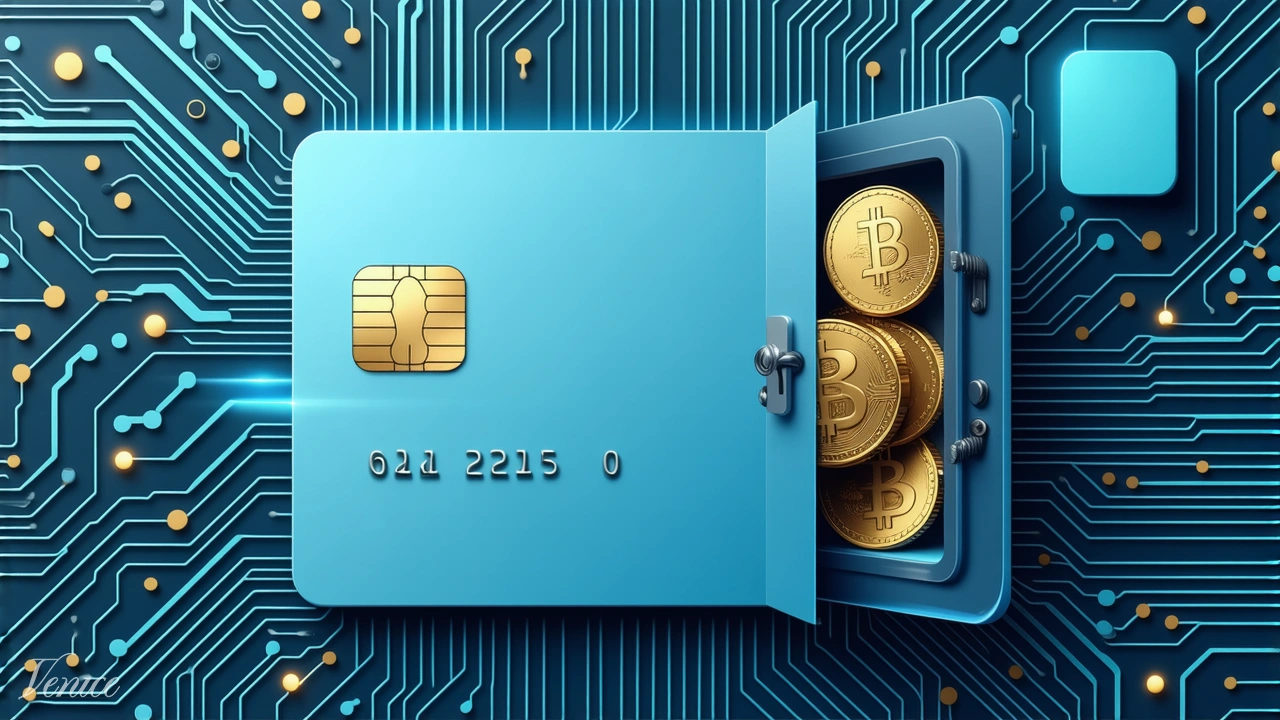
Short answer: Self-custody cards settle payments from a wallet you control via a smart account, so no provider holds your unspent funds. The counterparty risk moves from balance custody to key management and the issuing infrastructure.
The self-custody card segment answers the sharpest question in crypto payments: why should spending require giving someone else my money first? Traditional card architecture demands a custodial balance - you load, the provider holds, the card spends what the provider releases. Self-custody cards restructure that: the provider authorizes payments, but the funds sit in a wallet you control until the exact moment of settlement. This guide explains the machinery and prices the trade honestly.
table of contents
How the architecture works
The enabling technology is the smart account - a programmable wallet contract on a blockchain, distinct from a seed-phrase wallet. Gnosis Pay builds on Safe, the battle-tested smart account standard: your card draws on a Safe account whose keys you hold, with programmable spending limits and allowances set at the contract level [1] [3]. MetaMask Card takes the same shape through MetaMask's own wallet infrastructure, spending stablecoins on Linea through a linked spending account [2].
The payment flow: at checkout, the authorization request runs through the card network to the issuer (typically Monavate, a licensed e-money institution), which forwards the authorization to your smart account in real time. The smart account releases exactly the settlement amount - a stablecoin transfer - and the transaction completes on card rails. Between payments, nothing sits with the card provider: the issuer holds no balance of yours, only an authorization relationship.
Compare that with the custodial flow - load, provider holds, spend from provider's ledger - and the difference is a single question: who can move your money without your action? On custodial cards, the provider can (and must, to process payments). On self-custody cards, only a transaction from your wallet can.
What self-custody actually buys you
The concrete benefits are narrower than the ideology suggests, and sharper than critics admit.
Insolvency protection is the real one. When a card provider dies - and our dead-cards archive documents the mortality rate - custodial balances die with it. A self-custody card user loses a card, not funds: the wallet keeps working, the assets remain under your keys, only the payment rail is gone [1]. That asymmetry is the segment's honest selling point.
Programmability comes second: smart accounts enforce spending limits, per-merchant allowances and policies at the contract level - controls custodial providers offer only as app settings they can change [3].
KYC still applies. This is the common misconception: self-custody describes fund custody, not anonymity. Gnosis Pay integrates identity verification at onboarding; MetaMask Card verifies through its application flow [1] [2]. Card issuance on regulated rails requires a BIN sponsor, and BIN sponsors require verified users. The privacy-correct comparison is with no-KYC cards, which trade regulation away entirely - a different product with a different risk profile.
What it honestly costs you
Self-custody relocates risk; it does not delete it. Your key management becomes the single point of failure. A lost seed phrase, a compromised device or a malicious approval now endangers the card balance directly - there is no provider support desk that can reverse a blockchain transaction. Smart accounts mitigate with social recovery and multi-signature setups, but the mitigation is your responsibility to configure.
The rails are narrower: stablecoins only, on supported networks. Sending USDC to the wrong chain or a USDT variant the account does not support can strand funds - the coin matrix on each review is the safety check before any deposit.
Application throughput is the segment's practical weakness: MetaMask Card applications report multi-week processing states in community threads [2]. The infrastructure is newer, the issuance pipelines slower, and patience is part of the current price.
Who should choose this model
The self-custody card is the right architecture for a specific user profile: someone who holds stablecoins, values the insolvency protection enough to manage smart-account security, and accepts full KYC as the cost of regulated rails. For that profile, Gnosis Pay's partner-app distribution and MetaMask's Linea card are the reference products - both issued through licensed EMI infrastructure with the custody question structurally answered [1] [2].
For a user who wants to spend BTC over Lightning, or who needs a no-KYC rail, or whose holdings live on an exchange anyway, the custodial segment serves those profiles better - with the corresponding custody trade documented in each review. The comparison table's custody column exists precisely to make this filter a one-click decision.
The honest summary: self-custody cards are the only products in this market where the provider's death costs you a card instead of your balance. Everything else - KYC, stablecoin rails, key-management burden - is the price of that guarantee.
Keep reading: For the regulation side of the European programs, see the Europe guide; for the privacy-focused alternatives, the no-KYC risk guide.
FAQ
What is a self-custody crypto card?
A card that settles each payment from a wallet you control - typically a smart account - instead of a provider-held balance. The issuer authorizes transactions; your funds stay yours between payments.
Is self-custody safer?
Against provider insolvency, yes - your unspent funds cannot vanish with the company. Against your own key management, no: lost keys and bad approvals are your problem now.
Which cards are self-custody?
Gnosis Pay (Safe smart accounts) and MetaMask Card (Linea-based smart spending) are the established programs. Our custody column marks each card in the comparison.
Do I still need KYC?
Yes - card issuance requires a regulated BIN sponsor, and both major self-custody programs verify identity. Self-custody is about fund custody, not identity privacy.
What happens if the card program dies?
Your funds remain in your own wallet - the card stops, the money does not move. That is the core advantage over custodial balances.
Ready to pick a card? The comparison table has the live values, the finder narrows them down:
Sources
- Gnosis Pay - self-custodial card infrastructure documentation - accessed 2026-09-18
- MetaMask Card - web3 debit card product page - accessed 2026-09-18
- Safe - smart account wallet documentation - accessed 2026-09-18